Monday, July 7, 2014

Harvest

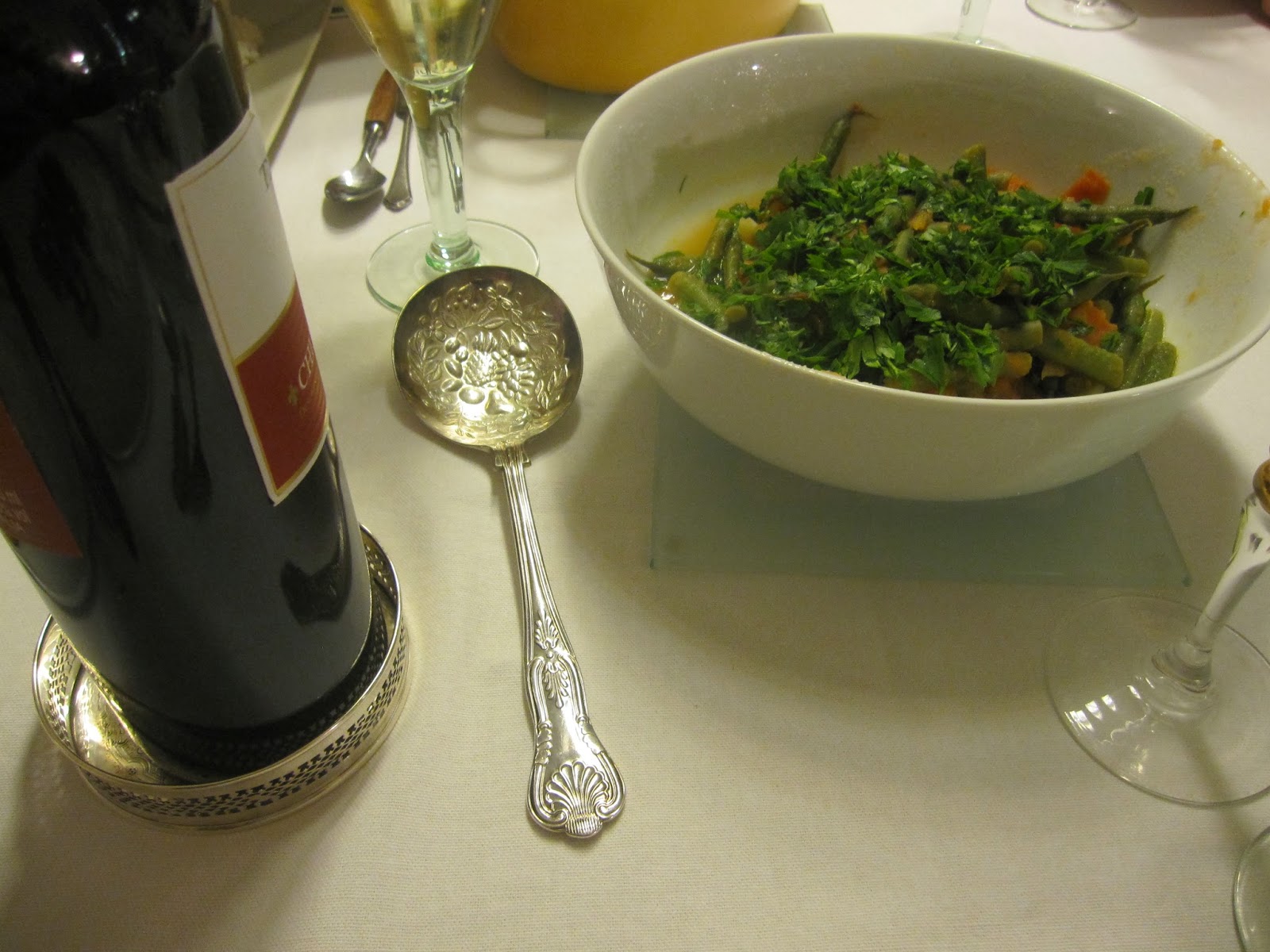
The Barga Book Club met in June in a home of significant recent historical value. Memories were made here at a large table on long fragrant summer evenings. One member recalled wistfully their many children laughing and splashing in the small pool in the courtyard and hours spent in intense discussion. To her solace the home has been preserved almost as it was by the next owners right down to the beautifully stenciled walls and wood stoves. 

And thus began another evening of intense discussion amongst the Book Club members as we discussed the novel Harvest by Jim Crace. The story, set in a generic rural English area at an undefined period of historical value marked by the Enclosure Act, begins with fire and ends in fire, both arson, the first possibly unintentional the second clearly retribution. Smoke and fire themes throughout included the concept that when a squatter made a fire and the smoke was seen he or she had the right to stay on the land.

An area of common lands worked by its peasants is the setting for a feud between its noble family owners, the in-law resident owner wishing it to remain as is, is overcome by a blood relative whose claim is stronger and wants to modernize and turn farmland into sheep grazing and wool production in what is to become the beginning of the industrial revolution. 

Margaret, who had recommended the book on its strong reviews was very disappointed. She had trouble with the first person narrative and disliked the voice, citing meticulous descriptions which became shopping lists, and a decided lack of emotion. It didn’t make her feel a thing. 

Cynthia mentioned its relevant echoes of her own life experience in the main character, Walter Thirsk, who had come from elsewhere and never felt he belonged and the connection that he wasn’t “of the soil” and estranged. She also observed the powerful theme of the veneer of civilized behavior and how quickly it cracks, as violence is never far from the surface. She appreciated its detailed research, and themes of refugees, outsiders, socio-economic class system, and thought of it as a power based allegory. 

Elisabeth referred to it as an historical novel but would have preferred more history and less novel. Salene managed to finish it but found it dry, lacking dialogue but the imagery poetic. Marijke loved the descriptions of the countryside, daily life, its environment and the themes of trust and suspicion, and disillusionment, and reality. Pietro found it fantastic, appreciated the inner thought monologue style but found elements unbelievably cruel and unrealistic, yet insightful.

Helen pointed out its capitalist theme. How primitive life was where superstition overrides any kind of rational behavior, but that characters were not well developed, except nature and the environment which was a strong character in itself. In consensus it was felt that the landscape was the deepest, and most beautifully, poetically drawn and moving character, as Salene had pointed out.  Bill’s adjectives were: metaphorical and gutless.

Kerry addressed a misogynist undercurrent in that, of two female characters one represented exclusively a sexual utilitarianism and the strongest female character was so because she was primitively and undefinably sexually attractive, although not physically so and, to the men she seemed to beguile, that came down to sorcery. The book seemed an excuse to take a pivotal period theme and develop it but that it ended up as an insensate story, all smoke and no fire.

Thank you to everyone who contributed, to the rousing discussion and delicious dishes.

The next books and meetings are as follows:

July 31: The Tin Ring by Zdenka Fantlova, date to be announced at Marijke and Pietro’s.

September: Dear Life by Alice Munroe, date and venue to be announced

October:  Canada by Richard Ford, date and venue to be announced

November: The Following Story by Cees Nooteboom date and venue to be announced


Friday, June 6, 2014

Bitter and Sweet


As we’ve always held, it’s not about the food, or the setting, but as always, the Book Club last Thursday was regaled with a sumptuous meal in a sublime setting to discuss Hotel on the Corner of Bitter and Sweet by Jamie Ford. 

The novel is the story of two Asian children, a Chinese boy and a Japanese girl, and their families ethnic rivalries during the period of the internment of the Japanese of the pacific coast of the United States during World War II.  The story opens with the clearing out of a basement of The Panama Hotel where family possessions of the Japanese relocated to internment camps were stored. It methodically follows the two main characters through their childhood separation, the boy’s father’s deceptive tactics to keep them apart, and their eventual reunion late in life.

Most readers appreciated the story for shedding light on a little known aspect of American history, and some elements introduced which lent the story real texture. 

Salene, as always found something positive, in the recurring Jazz theme and the apt title in the real sense of the bitter sweet in the tale.  Bill remarked that it was a great portrait of displacement, and with typical understatement, kind of insipid. Helen dubbed it certainly not a classic, but a pleasant easy read. Pietro repeated that as usual he enjoyed reading a book that he would not have chosen himself but that it was not great, filled with cliches, but did trigger other thoughts and reminded us of the horrors of the Japanese camps in Indonesia, an eye opener as to the basis of truth. Marijke agreed and added it was unrealistic, unbelievable and overall unconvincing. Krysia found it superficial and Cynthia thought it was an interesting story, but flat, of the push pull between immigration, integration and assimilation. All felt it too generalized, a missed opportunity to delve deeper into just one or two of the recurring themes. 

In a delightful aside Bill recommended a few of his favorite books to add to our reading list: The Secret of Santa Vittorio by Richard Crichton; A Man Called Intrepid, by William Stevenson;  Kabloona by French adventurer Gontran de Poncins, written in collaboration with Lewis Galantiere. Pietro recommended Canada by Richard Ford and The River Burns by Trevor Ferguson.


Thank you to everyone who contributed the delicious fare and participated in the lively discussion.

The next books and meetings are as follows:

June: Harvest by Jim Crace,  TUESDAY 24 June at Bill and Cynthia’s

July: The Tin Ring by Zdenka Fantlova, date to be announced at Marijke and Pietro’s.

September: Dear Life by Alice Munroe, date and venue to be announced

October: The Following Story by Cees Nooteboom date and venue to be announced

Monday, April 28, 2014

Stoner

With a warm fire in the fireplace to cut the slight chill of the late April evening, home made sausage rolls, lasagna and quiche on the table, The Book Club gathered at Margaret's to discuss Stoner by John Williams.

A survey of great American novelists and dramatists of the early to mid-20th century from Fitzgerald, through Faulkner, Albee, Tennessee Williams, and Eugene O’Neill provides a clue to the background of Stoner.  Set at the University of Missouri before, during and after the Great War it is the story of William Stoner, the only son of simple methodist farmers raised working on the farm and sent to University to learn agriculture but where instead he falls in love, with language and literature, and drastically changes course to ultimately teach as an assistant professor in the English department. 

The setting in northeastern Missouri reflects the complicated legacy of once fertile but now arid farmland of the hardworking, plain spoken, self reliant people of the midwest and its climate, its French heritage, riverboat romanticism and adventure of Mark Twain and vestiges of the antebellum southern sensibilities in the form of the classic southern mansion of the head of the department replete with slave/servants. 

William Stoner is a stolid student. He excels, understanding the logic of grammar and poetry in literature but grapples with trying to express himself to his classmates, professors and ultimately students. He meets and falls in love with a beautiful young woman from St. Louis visiting a relative, and after an awkward courtship proposes marriage and, though her behavior is indicative of severe dysfunction, she accepts and insists on a fast and informal wedding. Unlike several female characters in the previously mentioned canon of literature, she is neither alcoholic nor drug addict, but is fatalistically disturbed nonetheless and Stoner eventually resigns himself to a failed marriage and quietly plows ahead writing a book, and raising their daughter until his often absent, in mind and spirit if not always body, wife intercedes and Stoner then loses the one thing besides his literature which he loves the most. 

He is embroiled in a serious teacher student disagreement which is in error judged in his disfavor and is then consigned to go back to teaching entry level classes. Nevertheless he takes it under the chin and once again forges ahead as he will continue to for the rest of his life, head down, nose to the grindstone, perhaps with remorse for having left his parents to manage on their own as they claimed they would, or possibly with some guilt for not having even wanted to join the war effort as his close friends and classmates did.

In the same sense that the setting is evocative of the ever present conflicting essence that is Missouri, not strictly midwestern nor southern but a complex mixture of the two, the characters represent many of the prototypes in literature up until the period. The ill fated tycoon in the person of his father-in-law, the academics once inspired but eventually completely disillusioned and the exquisite representation of the sublime to grotesque in sexuality in the form of the new department chairman, his body hideously misshapen, but with the face of a matinee idol and a full head of wavy blond hair. 

Though continuously dejected Stoner eventually mentors a brilliant young co-ed and ultimately they become lovers and he is validated and satisfied professionally and personally in what is a rewarding relationship of the like minded. The relationship ends but they both leave it fulfilled. 

The comments of the group were, as always, astute and intuitive. Margaret and others remarked on Stoner’s frustrating passivity, and relentless lack of emotion with regard to almost all but literature, whereas Cynthia translated that as stoicism of the plain spoken, hardworking people. Others saw it as resignation. Janet and Elliot felt it was cleverly, even brilliantly written but could not get past the idea that he was extraordinarily passive to the point of incredulity.  Bill observed it as universal, how little we may all feel we have accomplished in life, how we may never be what we want to be. Helen loved it for its understated passion and his discovery of literature. 

With Stoner Williams accomplished a well rounded story, influenced by but never derivative of the great American literary library. In short it is a complex, multidimensional tale which moved us on many levels.

A warm thank you to our host and everyone who participated and provided the exquisite meal.

The next meetings are as follows:


29 May: Hotel on the Corner of Bitter and Sweet, at Krysia's

June: Harvest by Jim Crace, date and venue to be announced

July: The Tin Ring by Zdenka Fantlova, date and venue to be 

September: Dear Life by Alice Munroe, date and venue to be announced


Monday, March 31, 2014

Memoirs of a Survivor

On a cool evening in late March members of the Barga Book Club stepped into the warm elegant contemporary interior of an ancient stone farmhouse in Tiglio Basso not itself untouched by the winter’s travails, but, a distinct promise of spring was in the air this night as we enjoyed the international flavors of chili con carne, braised chicken with ginger, orange and garlic, a mixed salad with specially imported watercress, and luscious desserts, and discussed Memoirs of A Survivor, by Doris Lessing. 

This book is commonly referred to as a ‘dystopian’ novel but this reference does the story the serious disservice of relegating it to this limiting genre.  The poignant story unfolds during a period of governmental decline and degradation. For some time goods have become scarce and services and infrastructure have deteriorated to the extent that most people are in desperate circumstances, a not too distant potential condition even in some first world countries. 

The narrator, unnamed, is charged with caring for a girl and her pet during a period of societal decline, when many others are using a large British city as a staging ground and gradually fleeing  to find food and shelter elsewhere. Over the period the girl grows into a young woman as the environmental, social and political situation worsens. The narrator watches the girl grow and change and guides her with a very light but firm hand, rarely criticizing or judging, and relates the events thoughtfully and with great insight in a memoir with asides into another dimension which expand and complete the story. The narrator’s tone is that of stoically being watchfully resigned to the situation calling on his or her own coping mechanisms and resourcefulness to survive, as is everyone else. 

In review, Krysia remarked on the powerful imagery which has always stayed with her and Salene felt it was a fantasy fable in which the narrator went from being quite cold to being maternal, and referenced a Lolita quality. Helen aptly pointed out that there is an assumption that the narrator is female but no allusion, and that there were many unspoken assumptions in the descriptions of the narrator’s disturbing, unreal internal reality. Margaret drew parallels with other tales of gradual societal decline such as Roman Polanski’s The Pianist and the individual’s abilities of coping and survival in oppression. One element conjured the human capacity for control and violence akin to another dystopian novel The Lord of the Flies.  Lessing was known for her Sufist and Jungian studies, as well as investigation into altered states. All of which are tied into this rich tapestry of a novel.


So, Ms. Lessing’s book may be set in a dystopian atmosphere filled with anxiety and fear, but most of the characters, dwellers and travelers, are equanimous, kind, cooperative, and mutually beneficent in this, her great tribute to the survival of the human spirit.

A warm thank you to our host and everyone who participated.

The next meetings are as follows:

24 April at Margaret's, Stoner by John Williams

29 May: Hotel on the Corner of Bitter and Sweet, venue to be announced

June: Harvest by Jim Crace, date and venue to be announced

July: The Tin Ring by Zdenka Fantlova, date and venue to be announced

September: Dear Life by Alice Munroe, date and venue to be announced


Friday, February 28, 2014

The Gathering


The members of the Barga Book Club met on Thursday in the serene interior of the one home seemingly untouched by this winter’s liquid destruction or personal hardship.  We could leave our troubles outside inasmuch as possible.  As usual we were sublimely hosted and treated to a luscious meal provided by those present with even a reminder of those not present with Plum jam from the Bianchessi’s provided by Isobel to accompany her delicious scones.  

The novel up for discussion was The Gathering by Anne Enright. It is a narrative in what Margaret relegated to the Misery Memoir genre and Kerry compared to numerous other funereally set pieces such as The Red House, Last Orders, Amsterdam. All stories around which a death is the continuous point of reference. 

Veronica struggles with memories of her brother Liam, who has committed suicide in the midst of a life defined by his alcoholism. They were two of the twelve children in this Irish catholic family delineated by its lack of connectedness.  Veronica also struggles with her own marriage and children and one comes to understand her emptiness through her past, her mother rendered vapid through relentless childbearing. The humiliation of needs having to be met through compromise.

Krysia loved the writing, the author’s ability to make you remember being a child. The way she describes circumstances  with masterful observation, attention to detail. 

The Guardian put it this way: strangers meet in a hotel and share the presence of potential nakedness without a touch; Liam's thirst for alcohol rages while Veronica's pads along behind her through insomniac nights; a moustache can barely be noticed before its description moves on to the idea of tickled thighs. Sex - for Enright, as for John Banville - is a kind of gleefully appalling slapstick that dogs humanity and leaves it betrayed. This is a world where fidelity is impossible and sex is absurd, but love is forever, like a scar. 

Salene who also loved it, saying it was about love, remarked on the power in the repetitive use of the word roar, and the disintegration of the family through the father who was a serial adulterer. 

Margaret and Helen both found the novel frustrating and sad, were irritated with the fecklessness of the characters and post relationship fantasy and way too much description of male genitalia. 

The next meeting will be on Thursday March 27 held at Helen’s  to discuss The Memoirs of a Survivor by Doris Lessing

The following to be held on Thursday April 24 at Margaret’s to discuss Stoner by John Williams 

Then Thursday May 29th at Krysia’s to discuss The Hotel on the Corner of Bitter and Sweet by Jamie Ford

Thank you to everyone and we look forward to seeing you next month.


Thursday, January 23, 2014

Spring Sonata

Once again the faithful members of the Barga Book Club  on Wednesday were cosseted and pampered in the luxurious, warm and cozy ambience of a 17th C. palazzo in Barga Vecchia with the, as always, sumptuous and inventive repast, ostensibly to discuss Spring Sonata by Bernice Rubens. This book polarized the few who read it, in two distinct camps. You either loved it or hated it.  

The story is a fantastical tale of absurdist black comedy of foetal passive rebellion and resistance against a seriously dysfunctional family and its destructive designs on his future, as related via a diary kept in the womb and discovered on the decease of the mother and child.  

Helen and Margaret thoroughly enjoyed it and in its defense cited its tragic, inventive, comic, extraordinary plot with bizarre absurd story line and imaginative characters becoming stronger as the story unfolds.  Conjuring Philip Larkin’s This Be the Verse, They fuck you up, your mum and dad…  the bleak sinister elements were justified in flashes of honesty and truth, simultaneously absurd and insightful, surprising, astounding, fascinating and surreal.

Kerry and Krysia in the other camp found it a difficult read, at times revolting, even at times misogynistic, the writer seemly describing the female body in repulsive terms, as though she herself found it distasteful. It could be considered a cautionary tale, a fable like parable in the tradition of extreme exaggeration of absurdist theater but the means of conveyance belittled the poignantly poetic message.  

Thank you to everyone who participated! Nothing like a good discussion to make the event memorable. 

The next meeting will be held on Thursday February 27th at Selene’s to discuss The Gathering by Anne Enright

The Books chosen for subsequent months are:

March:  Children of the Sun by Doris Lessing

April:  Stoner by John Williams

May:  Hotel on the Corner of Bitter and Sweet by Jamie Ford


June:  Title to be announced, by Michael Ondaatje

Friday, November 22, 2013

The Red House

The Barga Book Club met on Wednesday in Albiano at the home of Anne and Rigo Capanni, still here processing their large olive harvest. The home reminded some of a welcoming gem like crofters dwelling or perhaps the gamekeepers cottage, from our recently reviewed selection Lady Chatterly's Lover, equally hearth warmed, cozy and romantic and decidedly more finely furnished. It was the perfect setting for a rainy November evening.

After a delicious meal of savory and inventive dishes, and a taste test of the Capanni's rich fresh olive oil processed in two different ways, we discussed The Red House by Mark Haddon. Following on his successful novels A Curious Incident of the Dog in the Night-Time and A Spot of Bother, some readers were disappointed with this story of an extended family thrown together on holiday and its queer dysfunctionality.  When mother dies the wealthy successful elder son invites his estranged sister and her family to join him and his family on holiday in Wales at his expense.  Discomfort and irritability are the order of the days and personalities clash, hormones rage and the weather creates havoc. In other words, it ends up a disaster after several major life issues come to the fore and children and adults both have melt downs and serious relational problems surface. 

Salene thoroughly enjoyed its readability and page-turner aspect, its believability and the fact that she could identify with the issues of the characters and saw it as an accurate statement on contemporary social issues. Krysia, although she had enjoyed his other titles found this to be confusing and difficult and she was frustrated with the lack of clarity in the writing itself, in the monologues and at times couldn't tell who was speaking, all of which conspired to make it not a good reading experience.  Others felt it was too much of a panoply of contemporary social ills and superficial solutions. 

Whether we enjoyed it or not, as always, the book inspired lively discussion and had the knock on effect of eliciting references to other authors and titles, which is an objective benefit of the book club. 

Thank you to everyone who participated and we look forward to seeing you at the next meeting.

January 22 at Palazzo Salvi, Spring Sonata by Bernice Rubens

February at Salene's  a selection by Doris Lessing