Monday, March 31, 2014

Memoirs of a Survivor

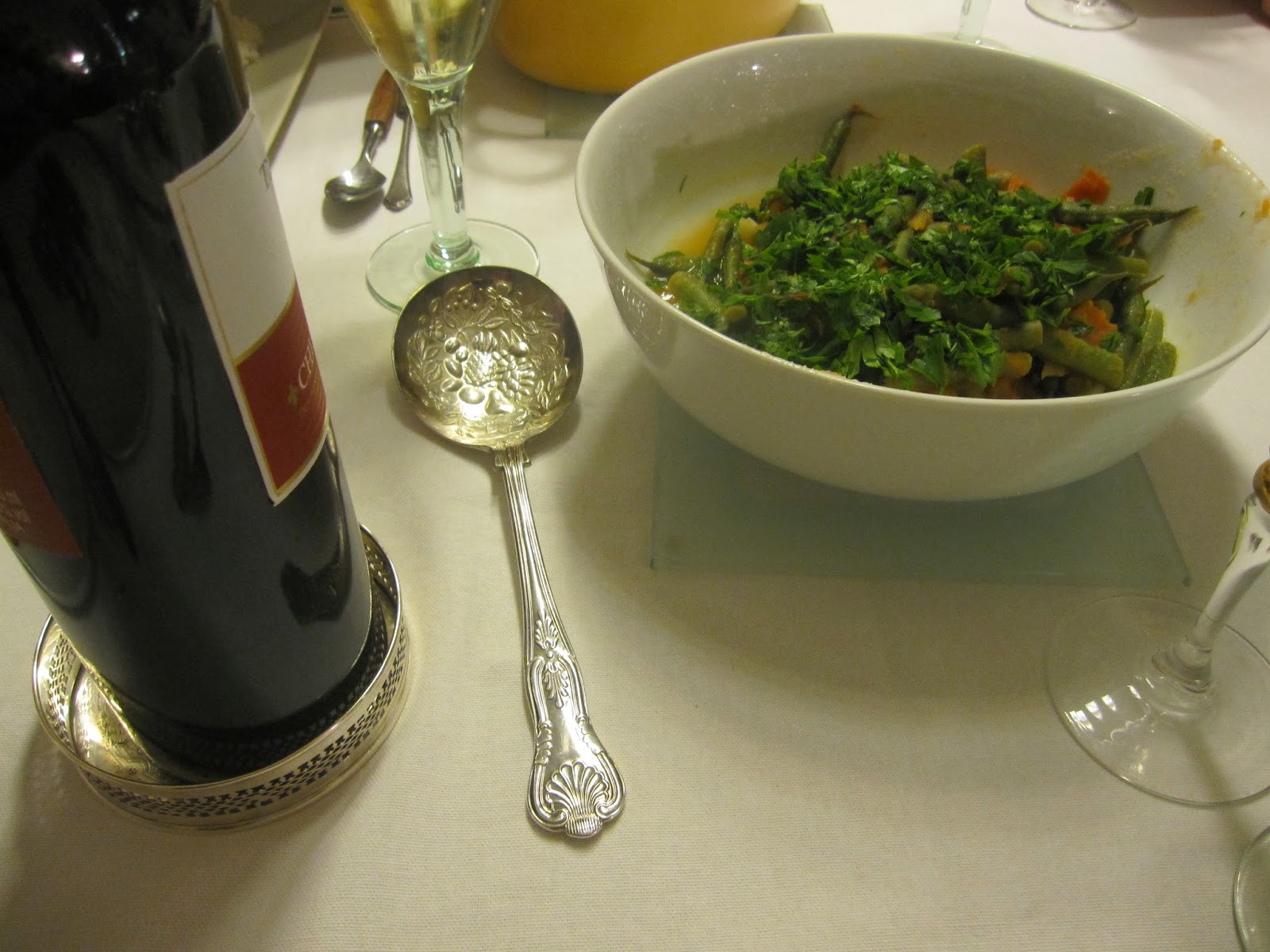
On a cool evening in late March members of the Barga Book Club stepped into the warm elegant contemporary interior of an ancient stone farmhouse in Tiglio Basso not itself untouched by the winter’s travails, but, a distinct promise of spring was in the air this night as we enjoyed the international flavors of chili con carne, braised chicken with ginger, orange and garlic, a mixed salad with specially imported watercress, and luscious desserts, and discussed Memoirs of A Survivor, by Doris Lessing. 

This book is commonly referred to as a ‘dystopian’ novel but this reference does the story the serious disservice of relegating it to this limiting genre.  The poignant story unfolds during a period of governmental decline and degradation. For some time goods have become scarce and services and infrastructure have deteriorated to the extent that most people are in desperate circumstances, a not too distant potential condition even in some first world countries. 

The narrator, unnamed, is charged with caring for a girl and her pet during a period of societal decline, when many others are using a large British city as a staging ground and gradually fleeing  to find food and shelter elsewhere. Over the period the girl grows into a young woman as the environmental, social and political situation worsens. The narrator watches the girl grow and change and guides her with a very light but firm hand, rarely criticizing or judging, and relates the events thoughtfully and with great insight in a memoir with asides into another dimension which expand and complete the story. The narrator’s tone is that of stoically being watchfully resigned to the situation calling on his or her own coping mechanisms and resourcefulness to survive, as is everyone else. 

In review, Krysia remarked on the powerful imagery which has always stayed with her and Salene felt it was a fantasy fable in which the narrator went from being quite cold to being maternal, and referenced a Lolita quality. Helen aptly pointed out that there is an assumption that the narrator is female but no allusion, and that there were many unspoken assumptions in the descriptions of the narrator’s disturbing, unreal internal reality. Margaret drew parallels with other tales of gradual societal decline such as Roman Polanski’s The Pianist and the individual’s abilities of coping and survival in oppression. One element conjured the human capacity for control and violence akin to another dystopian novel The Lord of the Flies.  Lessing was known for her Sufist and Jungian studies, as well as investigation into altered states. All of which are tied into this rich tapestry of a novel.


So, Ms. Lessing’s book may be set in a dystopian atmosphere filled with anxiety and fear, but most of the characters, dwellers and travelers, are equanimous, kind, cooperative, and mutually beneficent in this, her great tribute to the survival of the human spirit.

A warm thank you to our host and everyone who participated.

The next meetings are as follows:

24 April at Margaret's, Stoner by John Williams

29 May: Hotel on the Corner of Bitter and Sweet, venue to be announced

June: Harvest by Jim Crace, date and venue to be announced

July: The Tin Ring by Zdenka Fantlova, date and venue to be announced

September: Dear Life by Alice Munroe, date and venue to be announced


Friday, February 28, 2014

The Gathering


The members of the Barga Book Club met on Thursday in the serene interior of the one home seemingly untouched by this winter’s liquid destruction or personal hardship.  We could leave our troubles outside inasmuch as possible.  As usual we were sublimely hosted and treated to a luscious meal provided by those present with even a reminder of those not present with Plum jam from the Bianchessi’s provided by Isobel to accompany her delicious scones.  

The novel up for discussion was The Gathering by Anne Enright. It is a narrative in what Margaret relegated to the Misery Memoir genre and Kerry compared to numerous other funereally set pieces such as The Red House, Last Orders, Amsterdam. All stories around which a death is the continuous point of reference. 

Veronica struggles with memories of her brother Liam, who has committed suicide in the midst of a life defined by his alcoholism. They were two of the twelve children in this Irish catholic family delineated by its lack of connectedness.  Veronica also struggles with her own marriage and children and one comes to understand her emptiness through her past, her mother rendered vapid through relentless childbearing. The humiliation of needs having to be met through compromise.

Krysia loved the writing, the author’s ability to make you remember being a child. The way she describes circumstances  with masterful observation, attention to detail. 

The Guardian put it this way: strangers meet in a hotel and share the presence of potential nakedness without a touch; Liam's thirst for alcohol rages while Veronica's pads along behind her through insomniac nights; a moustache can barely be noticed before its description moves on to the idea of tickled thighs. Sex - for Enright, as for John Banville - is a kind of gleefully appalling slapstick that dogs humanity and leaves it betrayed. This is a world where fidelity is impossible and sex is absurd, but love is forever, like a scar. 

Salene who also loved it, saying it was about love, remarked on the power in the repetitive use of the word roar, and the disintegration of the family through the father who was a serial adulterer. 

Margaret and Helen both found the novel frustrating and sad, were irritated with the fecklessness of the characters and post relationship fantasy and way too much description of male genitalia. 

The next meeting will be on Thursday March 27 held at Helen’s  to discuss The Memoirs of a Survivor by Doris Lessing

The following to be held on Thursday April 24 at Margaret’s to discuss Stoner by John Williams 

Then Thursday May 29th at Krysia’s to discuss The Hotel on the Corner of Bitter and Sweet by Jamie Ford

Thank you to everyone and we look forward to seeing you next month.


Thursday, January 23, 2014

Spring Sonata

Once again the faithful members of the Barga Book Club  on Wednesday were cosseted and pampered in the luxurious, warm and cozy ambience of a 17th C. palazzo in Barga Vecchia with the, as always, sumptuous and inventive repast, ostensibly to discuss Spring Sonata by Bernice Rubens. This book polarized the few who read it, in two distinct camps. You either loved it or hated it.  

The story is a fantastical tale of absurdist black comedy of foetal passive rebellion and resistance against a seriously dysfunctional family and its destructive designs on his future, as related via a diary kept in the womb and discovered on the decease of the mother and child.  

Helen and Margaret thoroughly enjoyed it and in its defense cited its tragic, inventive, comic, extraordinary plot with bizarre absurd story line and imaginative characters becoming stronger as the story unfolds.  Conjuring Philip Larkin’s This Be the Verse, They fuck you up, your mum and dad…  the bleak sinister elements were justified in flashes of honesty and truth, simultaneously absurd and insightful, surprising, astounding, fascinating and surreal.

Kerry and Krysia in the other camp found it a difficult read, at times revolting, even at times misogynistic, the writer seemly describing the female body in repulsive terms, as though she herself found it distasteful. It could be considered a cautionary tale, a fable like parable in the tradition of extreme exaggeration of absurdist theater but the means of conveyance belittled the poignantly poetic message.  

Thank you to everyone who participated! Nothing like a good discussion to make the event memorable. 

The next meeting will be held on Thursday February 27th at Selene’s to discuss The Gathering by Anne Enright

The Books chosen for subsequent months are:

March:  Children of the Sun by Doris Lessing

April:  Stoner by John Williams

May:  Hotel on the Corner of Bitter and Sweet by Jamie Ford


June:  Title to be announced, by Michael Ondaatje

Friday, November 22, 2013

The Red House

The Barga Book Club met on Wednesday in Albiano at the home of Anne and Rigo Capanni, still here processing their large olive harvest. The home reminded some of a welcoming gem like crofters dwelling or perhaps the gamekeepers cottage, from our recently reviewed selection Lady Chatterly's Lover, equally hearth warmed, cozy and romantic and decidedly more finely furnished. It was the perfect setting for a rainy November evening.

After a delicious meal of savory and inventive dishes, and a taste test of the Capanni's rich fresh olive oil processed in two different ways, we discussed The Red House by Mark Haddon. Following on his successful novels A Curious Incident of the Dog in the Night-Time and A Spot of Bother, some readers were disappointed with this story of an extended family thrown together on holiday and its queer dysfunctionality.  When mother dies the wealthy successful elder son invites his estranged sister and her family to join him and his family on holiday in Wales at his expense.  Discomfort and irritability are the order of the days and personalities clash, hormones rage and the weather creates havoc. In other words, it ends up a disaster after several major life issues come to the fore and children and adults both have melt downs and serious relational problems surface. 

Salene thoroughly enjoyed its readability and page-turner aspect, its believability and the fact that she could identify with the issues of the characters and saw it as an accurate statement on contemporary social issues. Krysia, although she had enjoyed his other titles found this to be confusing and difficult and she was frustrated with the lack of clarity in the writing itself, in the monologues and at times couldn't tell who was speaking, all of which conspired to make it not a good reading experience.  Others felt it was too much of a panoply of contemporary social ills and superficial solutions. 

Whether we enjoyed it or not, as always, the book inspired lively discussion and had the knock on effect of eliciting references to other authors and titles, which is an objective benefit of the book club. 

Thank you to everyone who participated and we look forward to seeing you at the next meeting.

January 22 at Palazzo Salvi, Spring Sonata by Bernice Rubens

February at Salene's  a selection by Doris Lessing


Thursday, October 17, 2013

The Deadly Sisterhood

As the sun set for a few members of the Barga Book Club on a balmy mid October evening, we enjoyed a simple repast and discussed The Deadly Sisterhood, A Story of Women, Power and Intrigue in the Italian Renaissance, by Leonie Frieda. While one journalist reviewed it under the title of 'Italy's tiger mothers,' a reference to comparative parenting styles in contemporary society, it wasn't about parenting at all but about political power behind the scenes.

The book is a complex narrative of real and conjectured power politics focusing on eight wives or regents of Renaissance rulers. Often weakened by self indulgence or gout the princes risked diminishing dominions and often during or after bearing eight to ten heirs the women took the reins, literally in some cases, and led their families to glory or at least more territory and power. The book opens with Caterina Sforza, the Lady of Forli, and "she wolf of the Romagna" heavily pregnant, her husband Girolamo Riario assassinated, holding forth obscenely and holding down the fort until she was relieved by troops from her native Milan.

The book continues with convoluted historical details of Papal intrigues and brutal power plays often exploited by the wives. Machiavelli, a recurrent figure, had nothing on them, the ends justified their means.

Most readers felt it was a very interesting and enjoyable but sometimes difficult read keeping track of all of the personages and relationships and needing to cross reference the time line and family trees. Helen mentioned its not flowing as either novel or strictly biography during the period of the stranglehold of the the Papacy, a period of entitlement, self indulgence and privilege in which strong, well educated and politically astute women capitalize on their situations. Selene felt that eight women were a lot to cover in this way and like others felt the need to have more time to finish it and do the history justice.

Everyone enjoyed the sense of being able to imagine clearly where and how these women lived practically in our midst.

Thank you to everyone who participated and brought delicious food. We were all concerned for those who could not be there and hope to see them at the next meeting.

November 20 at Anne Cappani's Albiano, The Red House by Mark Haddon

December 18  Spring Sonata by Bernice Rubens venue to be announced

Thursday, September 26, 2013

The Fever Tree

A limited group of book club members assembled as the sun set on a mild fragrant fall evening  descending subtly lit stone steps bordered by sage and lavender in the gracious surroundings of  Helen’s Tiglio home to discuss The Fever Tree by Jennifer McVeigh. 

The Fever Tree, set in late 19th century London and South Africa is the story of a once privileged young woman forced to choose between two unpleasant options and torn between two men, one an idealist and the other an opportunist. The story accurately portrays the real events of the small pox epidemic in South Africa and its effect on the diamond mines and how avarice overrides altruism.

Margaret led the discussion citing the fascinating background research with reference to real epidemic events in South Africa and their implications in light of colonialization and exploitation. She commended some of  descriptive elements but mentioned the overdrawn characterization and the enormous frustration of the missed opportunity of building a great story around the historical events, for she relegated this book to Romantic Fiction, while not quite of the bodice ripping genre, it still leaves an unpleasant taste in the mouth, she added. 

Isobel found it an easy read, particularly in pace as the chapters were short and the plot linear and found the characterizations of the Dutch the most believable.

In absentia, Pietro Bianchessi added, via text message,  that he liked it but it was a bit cheap on the romance part.

Helen felt it was a good easy read and made reference to the South African issues brought to the fore and their repercussions in current society. So, she felt the book was thought provoking though superficial, and the characterizations didn’t ring entirely true.

The group was all the more indulged for being small, as the food was sumptuous and plenty. Thank you to all who participated and we look forward to seeing everyone at the following meetings:

The Deadly Sisterhood by Leonie Frieda October 16 at Kerry’s, Barga.

The Red House by Mark Haddon November 20 at Anne Capanni’s

Spring Sonata by Bernice Rubens  December 18 venue to be announced

Saturday, August 3, 2013

Love, loss and marriage

As the air cooled on the evening of one of the hottest days of the summer, about 8 members of the Barga Book Club met on Pietro and Marijke’s spacious terrace to discuss A Heart So White, by Javier Marias, with the spectacular view of Monte Forato in the distance.

A Heart So White, is a love story. It is couched in an intrigue of a tragedy recounted by one who was not directly involved. A narrative in the form of the memory thought process where one goes over and over the minutiae of a heartbreaking event which could never have been prevented, the protagonist wasn’t even born yet, yet he repeats the circumstances which led up to the event and its aftermath again and again, the way one does in one’s mind,  in the hope of understanding and coming to terms with them and perhaps to prevent or avoid it happening again. In an effort that the sins of the father are not visited on the son.

The novel opens with the heart wrenching suicide of a newlywed bride and eventually unravels a story of parallels, sublime clues, and complex relationships. The narrator veers off on seemingly unrelated tangents which eventually clarify or inform the narrative intrigue. It is a love story, as the narrator continuously and repeatedly seeks to put his marriage into perspective as to his expectations and its limitations, to understand how one can grow and continue to love a partner over the long term, and avoid the common pitfalls of disillusion and boredom, which have resulted in tragedy.  He exhorts the reader to “‘devote yourself to the marriage itself, as if confronted by the most important structure and task of your life, even if you believe that the task has already been completed and the structure built.”  Alas, this is fiction for, in interview, the author says he will never marry.  

Margaret, who had recommended the novel, pointed out the references to Macbeth, both obvious, the title is based on it, and indirect, the suicide of a wife based on her own feeling of complicity, or even culpability, in murder.  Margaret referenced the film Sliding Doors for its similar sense of parallel universes.  She mentioned the sense of listening to music, where the melody is repeated, and becomes familiar and comforting. How we are effected by circular decisions.

Isobel, as with several others, was eventually drawn into the story, having had to overcome a sense of tedium with its repetitiveness, but ultimately found it clever and fascinating.

Salene referenced the feeling that each repetition felt like an embellishment to a painted picture, and confirmed the musical sense of the rondo, with a current running through that something was not quite right.

Pietro, found it fully engaging but felt that the final mystery was anti-climatic.

Most members agreed it was one of the best and most complex and moving books we have read. A beautifully constructed story based on universal themes of marriage: love, loss, beauty, pain, betrayal, and secrets.

Thank you to the Bianchessis for their gracious hosting and to everyone who contributed and participated to the delicious repast and lively discussion.

Here is the list of upcoming titles:

The Fever Tree by Jennifer McVeigh September date and venue to be announced.
The Deadly Sisterhood by Leonie Frieda October date and venue to be announced
Title to be announced, November 20, at Anne Capanni's